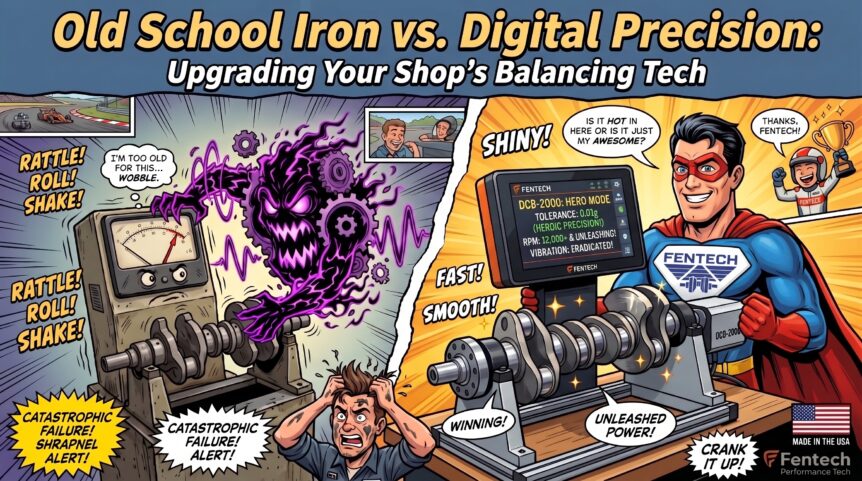
Old School Iron vs. Digital Precision: Upgrading Your Shop’s Balancing Tech

There is an undeniable soul to old-school engine building. You know the exact feel of a perfectly dialed-in micrometer, and your shop was built on decades of hard-earned craftsmanship. But let’s talk facts: when a customer brings in a high-dollar rotating assembly destined to live at 10,000+ RPMs, relying on the drifting calibration of a 40-year-old analog balancer is a …
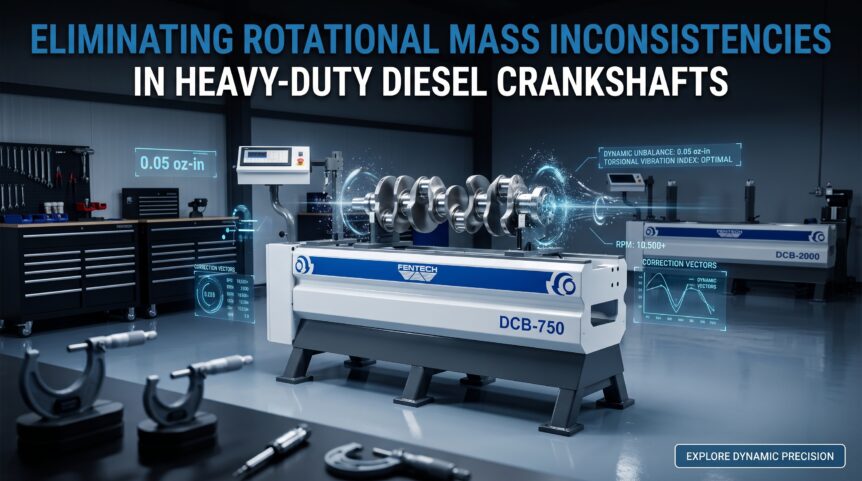
Eliminating Rotational Mass Inconsistencies in Heavy-Duty Diesel Crankshafts

When you’re spinning a heavy, long-stroke diesel crankshaft, you aren’t just building an engine—you’re managing a localized seismic event. Unlike a high-RPM gas race engine where lightweighting and rapid acceleration are the names of the game, heavy-duty commercial diesels are all about surviving extreme, sustained load and massive torque output. In this environment, rotational mass inconsistencies aren’t just power-robbers; they …

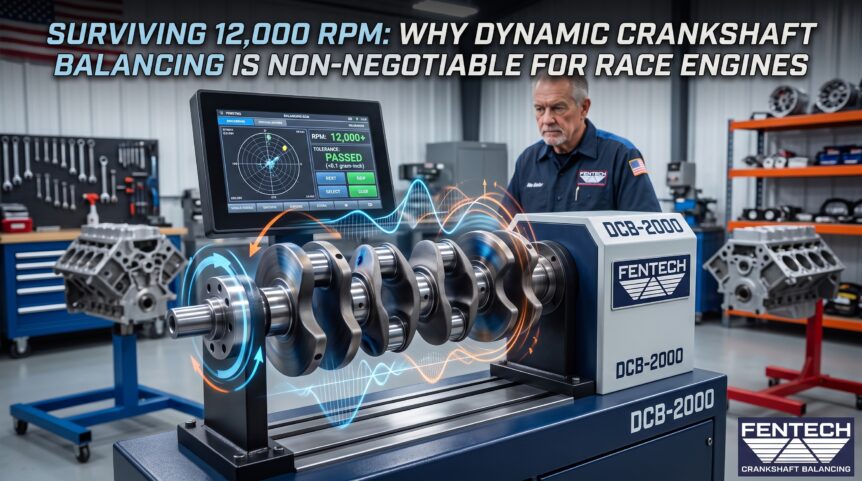
Surviving 12,000 RPM: Why Dynamic Crankshaft Balancing is Non-Negotiable for Race Engines

When you’re pushing a race engine past the 10,000 RPM threshold, you aren’t just fighting the competition—you’re fighting physics. At 12,000 RPM, the centrifugal forces acting on a rotating assembly increase exponentially. A crankshaft that feels “smooth enough” for a street build becomes a ticking time bomb on the track if dynamic balancing isn’t dialed in to absolute perfection. For …

The Next Evolution of Precision: Fentech Joins Forces with Custom Machine Works (CMW)

Look, when you’re building a race-winning power plant that’s going to live at 9,500 RPM, “close enough” isn’t in the vocabulary. If you don’t respect the physics of rotational mass, torsional vibration will flat-out destroy a bottom end. At Fentech, we’ve spent decades engineering the machines that engine builders trust to achieve sub-gram tolerances, freeing up parasitic horsepower and keeping …

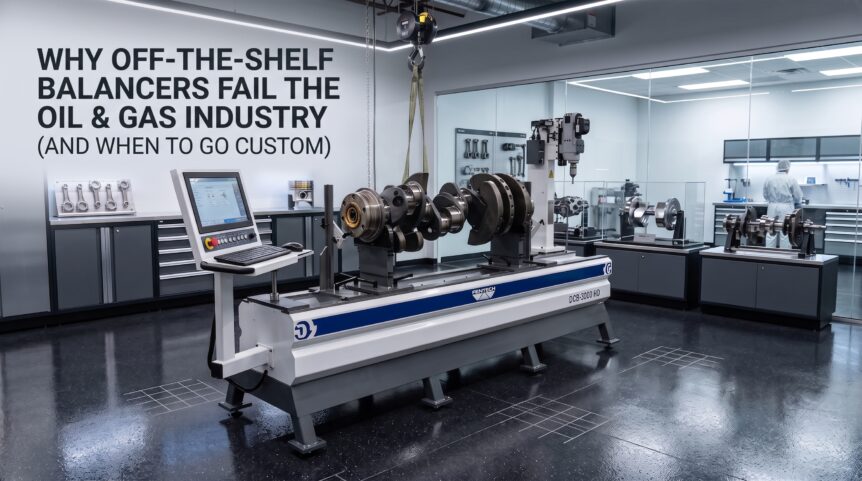
Why Off-the-Shelf Balancers Fail the Oil & Gas Industry (And When to Go Custom)

In the Oil & Gas industry, downtime isn’t just an inconvenience—it’s a financial hemorrhage. When an offshore rig or heavy land operation stops pumping because a massive compressor or drive shaft tears itself apart, the costs run into the millions. At the heart of most catastrophic rotary equipment failures is a silent killer: torsional vibration. When dealing with 10,000-pound compressor …

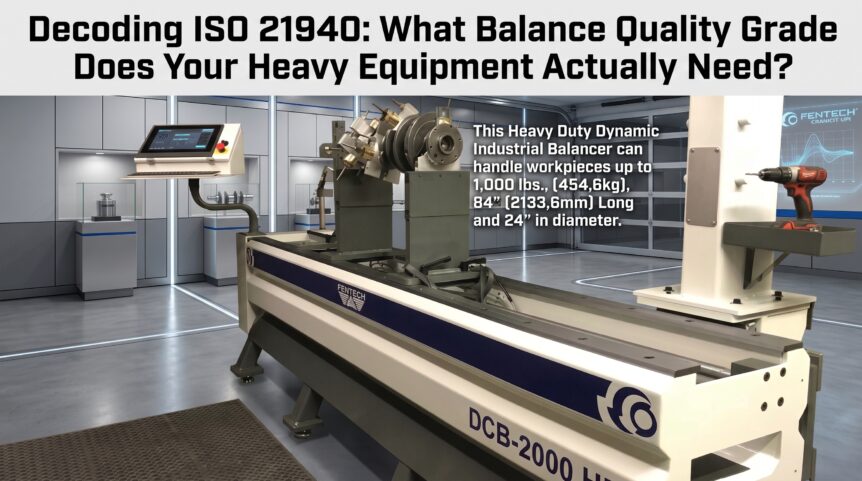
Decoding ISO 21940: What Balance Quality Grade Does Your Heavy Equipment Actually Need?

Look, we spend a ton of time in this shop talking about keeping high-strung race cranks alive past 10,000 RPM. When a race engine builder is chasing high-RPM horsepower, precise dynamic balancing is exactly what separates a podium finish from a windowed block. But the brutal physics of rotational mass don’t change just because you swap a screaming track V8 …

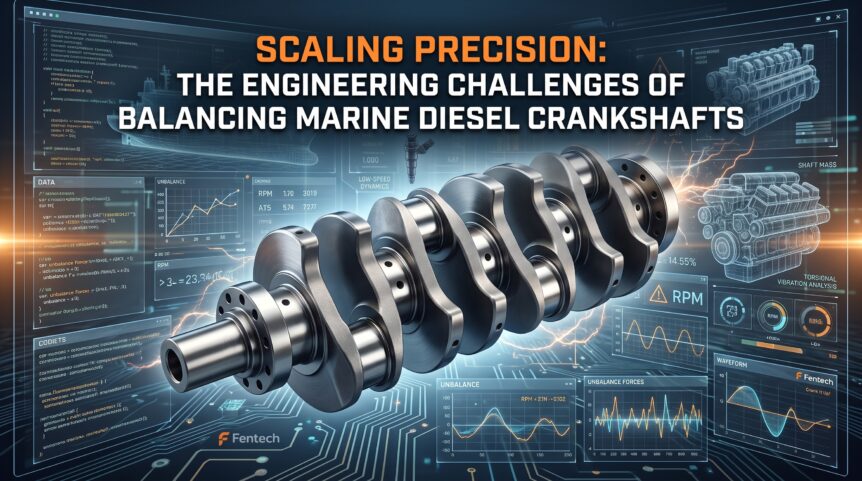
Scaling Precision: The Engineering Challenges of Balancing Marine Diesel Crankshafts

When you’re dealing with marine diesel engines, “heavy duty” is a massive understatement. We’re talking about crankshafts that weigh thousands of pounds, taking up the floor space of a small shop, and powering vessels through the most unforgiving environments on Earth. But here’s the mechanical reality: physics doesn’t care how big your engine block is. An imbalance in a massive, …