There is an undeniable soul to old-school engine building. You know the exact feel of a perfectly dialed-in micrometer, and your shop was built on decades of hard-earned craftsmanship. But let’s talk facts: when a customer brings in a high-dollar rotating assembly destined to live at 10,000+ RPMs, relying on the drifting calibration of a 40-year-old analog balancer is a …
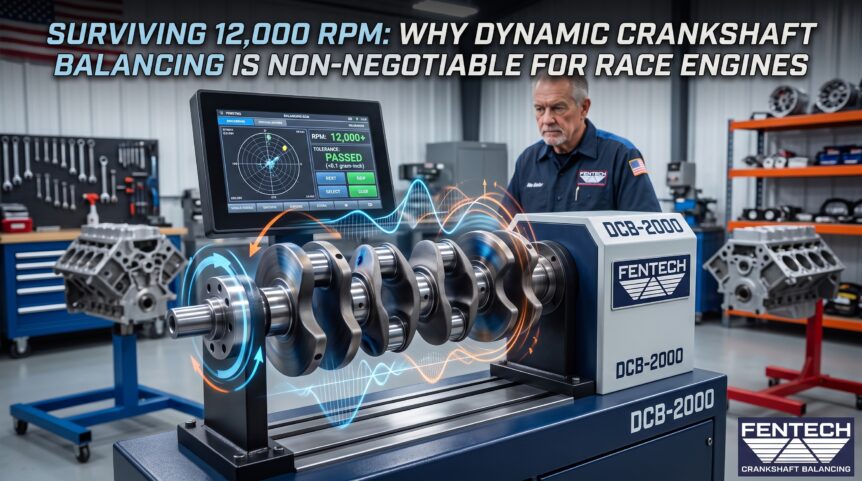
Surviving 12,000 RPM: Why Dynamic Crankshaft Balancing is Non-Negotiable for Race Engines
When you’re pushing a race engine past the 10,000 RPM threshold, you aren’t just fighting the competition—you’re fighting physics. At 12,000 RPM, the centrifugal forces acting on a rotating assembly increase exponentially. A crankshaft that feels “smooth enough” for a street build becomes a ticking time bomb on the track if dynamic balancing isn’t dialed in to absolute perfection. For …
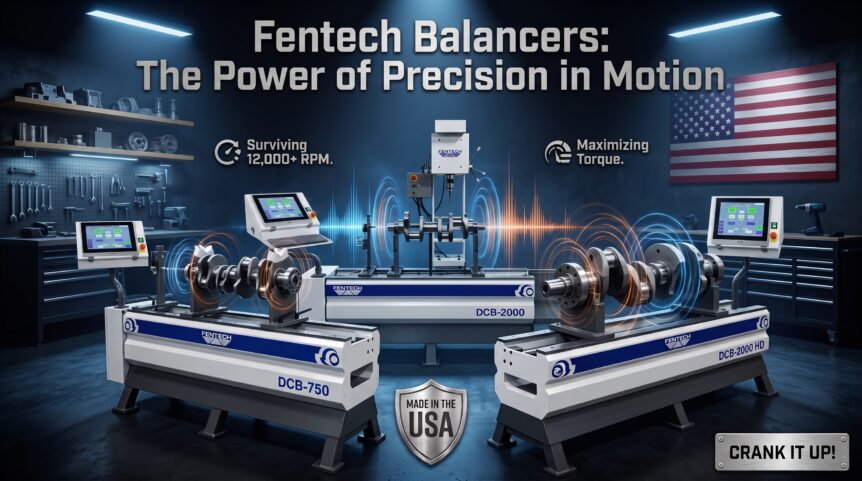
Choosing Your Weapon: Which Fentech Crankshaft Balancer is Right for Your Machine Shop?
If you are building engines that live on the ragged edge of physics, you already know the truth: horsepower doesn’t mean a damn thing if your bottom end shakes itself to pieces. When a customer’s motor is turning 10,000+ RPMs at the track, torsional vibration is public enemy number one. Even the slightest imbalance in rotational mass translates to catastrophic …